7 Interior Mistakes That Can Make Your Home Difficult to Maintain
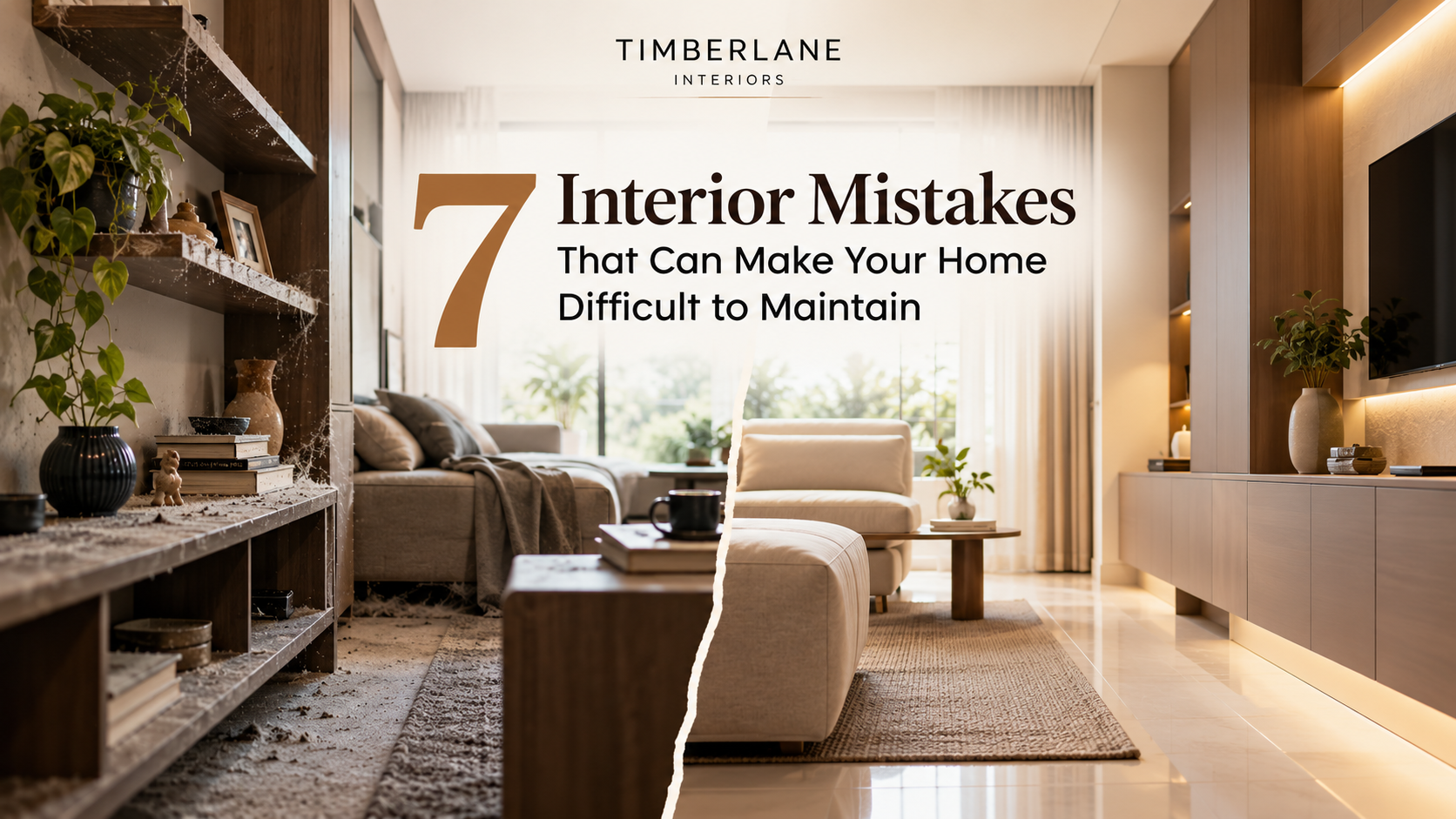
A beautiful home should not only look impressive on the day it is completed. It should also remain easy to clean, organise and maintain for years.
Many homeowners focus heavily on colours, finishes, furniture and design trends while planning their interiors. But some design decisions that look attractive initially can create unnecessary maintenance problems later.
Dust collecting in difficult corners, kitchen surfaces that stain easily, wardrobes that are difficult to clean and poorly planned storage can slowly turn a beautiful home into a space that demands constant effort.
Good interior design should therefore balance aesthetics, functionality and long term maintenance.
Here are seven common interior mistakes that can make your home harder to maintain and how thoughtful planning can help you avoid them.
1. Choosing High Maintenance Materials
One of the most common mistakes homeowners make is selecting materials mainly based on appearance.
Some surfaces may look luxurious in a showroom but require frequent polishing, special cleaning products or careful handling once they are installed at home.
For example, certain glossy finishes can easily show fingerprints, scratches and stains. Similarly, highly porous surfaces may absorb spills if they are not properly sealed.
When selecting materials for kitchens, wardrobes, TV units and other frequently used areas, durability should be considered along with appearance.
What to consider
Choose materials that are:
* Easy to wipe and clean
* Resistant to moisture
* Suitable for everyday use
* Scratch resistant where possible
* Durable enough for high traffic areas
The right material can significantly reduce the amount of maintenance your home requires over time.
2. Creating Too Many Open Shelves
Open shelves can make a space look stylish and visually interesting.
However, using too many open shelves throughout the home can quickly create a maintenance problem.
Books, decorative objects, kitchen containers and display items constantly collect dust. When several shelves are installed across the living room, kitchen and bedrooms, cleaning them regularly can become time consuming.
Instead of making every storage unit open, combine open display spaces with closed cabinets.
For example, a living room TV unit can include one or two decorative shelves while the remaining storage stays behind shutters.
This keeps the space visually attractive without requiring constant cleaning.
3. Leaving Difficult to Clean Gaps
Small gaps between furniture, walls, wardrobes and kitchen cabinets often become dust traps.
These spaces may appear insignificant during the design stage, but they can become frustrating once you start cleaning the home.
A narrow gap beside a wardrobe, underneath cabinetry or between furniture pieces may be too small for regular cleaning tools but large enough to collect dust.
A well planned interior should either provide enough clearance for cleaning or completely close unnecessary gaps.
Proper measurements during the design stage can prevent these awkward spaces from appearing later.
4. Ignoring Kitchen Maintenance While Designing
The kitchen is one of the most frequently used areas of any home.
Because of cooking oil, moisture, food particles and regular activity, the kitchen also requires more maintenance than most other rooms.
A common mistake is prioritising visual design without considering how easily the kitchen can be cleaned.
For example, excessive grooves, complicated cabinet designs or difficult to reach corners can collect grease and dust.
The kitchen layout should therefore make everyday cleaning simple.
Consider features such as:
* Easy to clean cabinet shutters
* Practical countertop materials
* Accessible corners
* Proper chimney placement
* Adequate ventilation
* Organised internal storage
* Easy access below the sink
The easier your kitchen is to clean, the easier it will be to keep it looking new.
5. Choosing Furniture That Is Too Close to the Floor
Low clearance furniture can easily become a hidden dust zone.
Beds, sofas, TV units and cabinets with very small gaps underneath them may look neat, but cleaning below them can be difficult.
If the gap is too small for a vacuum cleaner, mop or robotic cleaner to enter, dust can accumulate unnoticed.
There are generally two practical approaches.
Furniture can either have enough clearance underneath for easy cleaning or be designed with a completely closed base.
Avoid awkward spaces that are difficult to reach.
This small decision can make everyday housekeeping significantly easier.
6. Not Planning Enough Storage
A home can have beautiful interiors and still look messy if there is not enough storage.
Without proper storage, everyday items eventually start appearing on countertops, tables, beds and shelves.
This creates visual clutter and makes cleaning more difficult because objects constantly need to be moved before surfaces can be cleaned.
Storage planning should therefore begin before the furniture is finalised.
Think about what needs to be stored in each room.
For example:
Kitchen
Plan separate storage for appliances, groceries, cookware, cleaning products and frequently used utensils.
Bedroom
Wardrobes should accommodate clothing, accessories, luggage and seasonal items.
Living Room
Provide concealed storage for electronics, documents, chargers and miscellaneous household items.
Utility Area
Create dedicated space for cleaning supplies, laundry products and household equipment.
Good storage helps every item in your home have a dedicated place.
7. Following Design Trends Without Considering Daily Life
Interior trends change constantly.
A design that looks impressive on social media may not necessarily be practical for your lifestyle.
For example, highly elaborate wall panels, excessive decorative elements, complicated lighting features or large open display units may require significantly more cleaning.
Before adopting any trend, ask yourself a simple question:
Will this design still be practical for my everyday routine?
Your interior should reflect how you actually live.
A home with children may require durable surfaces and rounded edges. A family that cooks frequently may need a highly functional kitchen. Someone working from home may require additional storage and workspace.
Interior design works best when lifestyle comes before trends.
How to Design a Low Maintenance Home
Creating an easy to maintain home does not mean compromising on aesthetics.
In fact, many modern interior designs combine clean lines, durable materials and intelligent storage to create homes that look premium while remaining practical.
Some simple principles can make a major difference:
* Keep surfaces easy to access
* Use durable materials in frequently used areas
* Reduce unnecessary decorative grooves and detailing
* Plan sufficient closed storage
* Avoid awkward gaps between furniture
* Use practical finishes in kitchens and bathrooms
* Design according to your family's daily routine
Thinking about these factors during the planning stage can prevent many maintenance problems later.
Good Interior Design Should Make Life Easier
Interior design is not only about creating a home that looks impressive.
It is about creating a space that continues to work well after months and years of everyday use.
A well designed home should make cleaning easier, storage simpler and daily routines more comfortable.
Small decisions such as choosing the right cabinet finish, planning better storage or avoiding difficult to clean spaces can significantly improve how your home functions.
At Timberlane Interiors, we believe good interiors should balance style, functionality and everyday practicality.
Whether you are designing a new home or planning a complete interior transformation, thoughtful planning can help you create a space that looks beautiful while remaining comfortable and easy to maintain.
Planning your home interiors?
Get in touch with Timberlane Interiors and create a home designed around the way you live.
Ready to Design a Home That Feels Like You?
Connect with Timberlane today and let us transform your vision into a beautifully designed living experience.
Start Your Journey