Invisible Technology for Seamless Smart Home Interiors
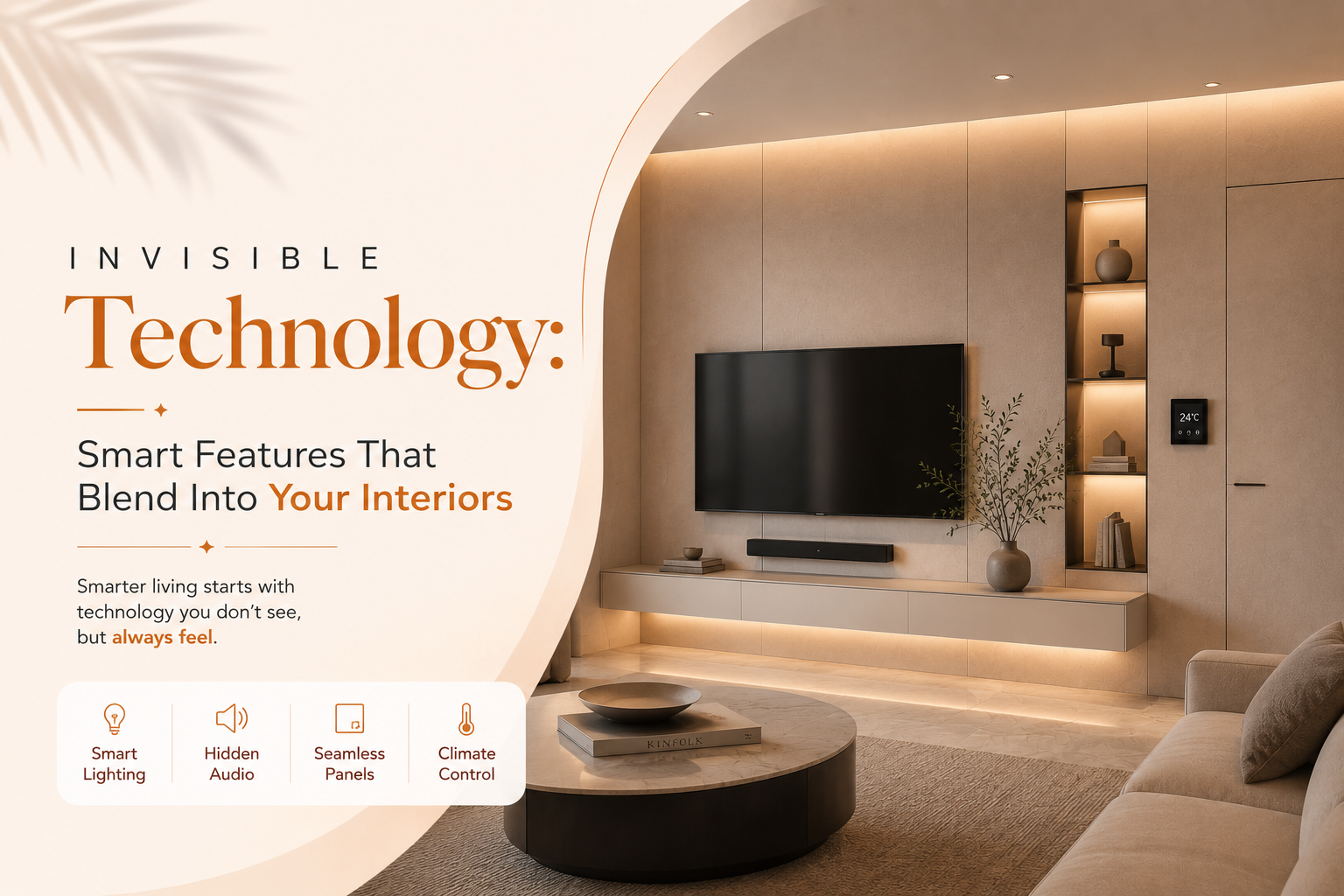
Smart homes were once imagined as spaces filled with visible screens, flashing devices, complicated control panels and futuristic-looking appliances.
Today, the idea of a smart home is changing.
The most thoughtfully designed technology does not constantly demand attention. It works quietly in the background, supports everyday routines and blends naturally with the architecture of the home.
This approach is known as invisible technology.
Instead of adding gadgets after the interiors are complete, invisible technology is planned alongside the lighting, furniture, storage, electrical points and finishes. The result is a home that feels more comfortable and convenient without looking overly technical.
In 2026, discreet home automation is becoming an important interior design direction. Designers are increasingly concealing controls, appliances and devices so that technology supports the space without dominating its appearance.
Here are some smart features that can be integrated seamlessly into modern Bengaluru homes.
1. Smart Lighting That Responds Naturally
Lighting is one of the easiest and most useful areas to automate.
However, a smart lighting system does not need brightly coloured bulbs or a visible control screen in every room. It can be integrated into ordinary-looking switches, dimmers, recessed lights and concealed LED profiles.
Homeowners can create different lighting settings for daily activities, such as:
a) Bright lighting for cleaning or working
b) Warm lighting for relaxed evenings
c) Focused lighting for cooking
d) Soft lighting for watching television
e) Low-level night lighting for passages
f) Welcome lighting when entering the home
Motion and occupancy sensors can also turn lights on only when required. For example, a concealed sensor may activate a soft light inside a wardrobe, kitchen drawer, passage or bathroom.
The technology remains mostly unseen, while the effect is experienced every day.
The most effective smart lighting systems should also include familiar physical switches. Recent design coverage shows that homeowners increasingly prefer sophisticated automation behind traditional, easy-to-use controls rather than depending entirely on apps or voice commands.
2. Concealed Charging Points
Charging cables can quickly make a carefully designed room look cluttered.
Invisible charging solutions allow phones, tablets and other devices to be powered without leaving multiple adapters and wires across countertops.
Charging points can be incorporated into:
a) Bedside tables
b) Study desks
c) Kitchen counters
d) TV units
e) Sofa-side consoles
f) Entrance cabinets
Wireless charging pads may be placed beneath or within selected furniture surfaces, while pop-up sockets can remain hidden when they are not being used.
USB and power outlets can also be positioned inside drawers or cabinets. This allows devices such as phones, electric toothbrushes, grooming equipment and kitchen appliances to charge out of sight.
The important part is planning these requirements before the furniture is manufactured. Adding charging points later may require visible wiring or modifications that disturb the finished design.
3. Automated Curtains and Blinds
Motorised curtains are a practical example of technology that can become almost completely invisible.
The motor and track can be concealed behind the false ceiling or curtain pelmet. The curtains can then be operated through a wall switch, remote control, mobile application or scheduled routine.
Automated window coverings can be programmed to:
a) Open gradually in the morning
b) Close during periods of strong afternoon sunlight
c) Provide privacy after sunset
d) Reduce heat entering the room
e) Create darkness for a home theatre
f) Operate while the homeowner is travelling
Matter-certified smart window coverings are now available for integration across major smart-home ecosystems, helping reduce dependence on one particular control platform.
For Bengaluru homes with large balcony windows, automated curtains can improve comfort while maintaining a clean, premium appearance.
4. Climate Control Without Visible Clutter
A comfortable home should maintain the right temperature and air quality without requiring several devices to be displayed around the room.
Smart climate systems can connect air conditioners, fans, thermostats and air-quality sensors.
These systems may adjust settings according to the time of day, room occupancy or preferred temperature.
Sensors can be integrated discreetly into ceilings, walls or other connected devices. Controls can also be centralised so that homeowners do not need separate remotes for every room.
Useful climate routines may include:
a) Switching off the air conditioner when a window is opened
b) Reducing cooling when no one is in the room
c) Preparing the bedroom before bedtime
d) Operating ventilation according to humidity
e) Monitoring connected appliances for maintenance issues
Platforms such as SmartThings already allow compatible appliances and home devices to be viewed and managed through one central interface. Availability varies depending on the product, ecosystem and region.
Technology should improve comfort and energy awareness without filling the walls with unnecessary control panels.
5. Speakers That Disappear Into the Room
Audio systems often introduce visible speakers, cables and equipment that compete with the interior design.
A more integrated approach uses in-ceiling speakers, in-wall speakers or sound systems concealed within furniture. Speaker grilles can be selected to blend with the ceiling or wall colour, while amplifiers and other equipment can be stored inside ventilated cabinets.
Invisible audio can be planned for:
a) Living rooms
b) Bedrooms
c) Kitchens
d) Balconies
e) Home theatres
f) Bathrooms
g) Entertainment areas
Different rooms can be connected to a central audio system, allowing music to play in selected areas without requiring a portable speaker on every surface.
For home theatres, acoustic panels can also be incorporated into the wall design. Fabric panels, wooden slats and upholstered surfaces can improve sound performance while appearing as decorative architectural elements.
6. Televisions That Do Not Dominate the Room
The television is often the largest visible piece of technology in a living room.
Invisible design does not necessarily mean removing it. It means ensuring that the screen does not control the appearance of the entire space.
A television can be:
a) Integrated into a dark wall panel
b) Recessed within customised cabinetry
c) Concealed behind sliding shutters
d) Hidden inside a motorised cabinet
e) Designed to display artwork when not in use
f) Paired with concealed wiring and equipment storage
Set-top boxes, routers, gaming consoles and sound equipment can be placed inside ventilated cabinets. Proper cable-management channels should be planned behind the wall panel so that wires remain accessible without being visible.
This allows the room to remain visually balanced even when the television is not being used.
Technology will continue to change, so systems should also be designed for maintenance and future upgrades. A hidden device is useful only when it can still be reached without damaging the furniture or wall finish.
A Smart Home Should Still Feel Like a Home
Invisible technology is not about automating every possible action.
It is about identifying where technology can genuinely improve comfort, safety, accessibility and energy use—and integrating those features without disturbing the design.
At Timberlane, we listen first.
We understand your routines, lifestyle, room requirements and preferred level of automation before planning your interiors. From concealed charging and integrated lighting to automated curtains, entertainment systems and smart storage, every feature is considered alongside the complete design.
Because the smartest home is not the one with the most visible technology.
It is the one where everything works naturally around you.
Planning smart interiors for your Bengaluru home?
Connect with Timberlane for a personalised design consultation and create a home where thoughtful technology and timeless design work seamlessly together.
Ready to Design a Home That Feels Like You?
Connect with Timberlane today and let us transform your vision into a beautifully designed living experience.
Start Your Journey