Material Trends 2026: Murano Glass, Liquid Metal & More
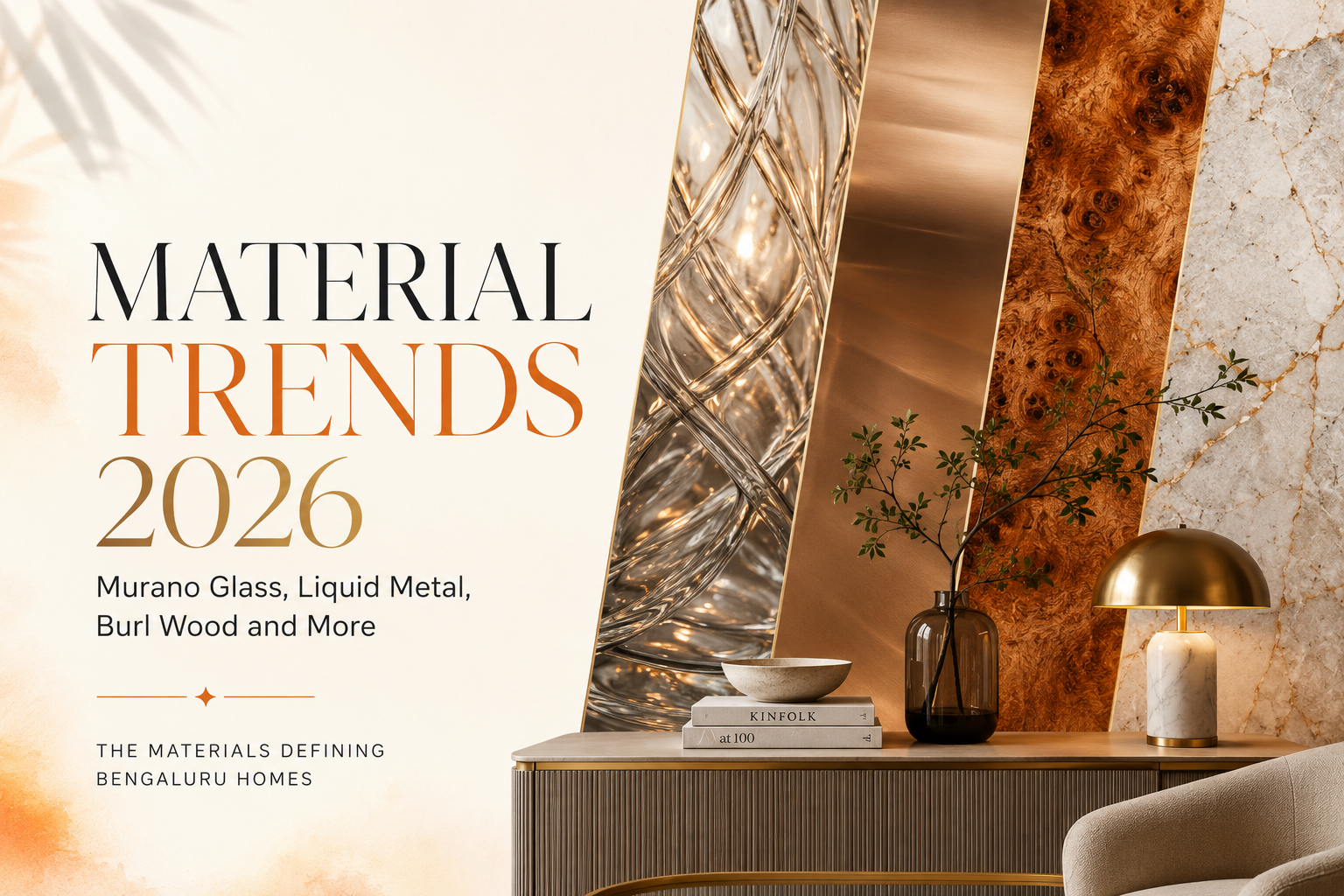
In 2026, interiors are becoming less uniform and more expressive.
Homeowners are moving away from flat finishes, repetitive laminates and spaces that look as
though they were copied directly from a showroom. Instead, the focus is shifting towards materials with texture, natural variation, craftsmanship and character.
Current design coverage points towards homes that feel personal, tactile and collected over time.
Darker wood, hand-blown glass, patinated metal, sculptural stone and handcrafted surfaces are being valued for the way they interact with light and develop character.
For Bengaluru homeowners, this does not mean using several statement materials in every room.
The strongest interiors will use distinctive surfaces carefully, allowing one material to become the highlight while the rest of the space remains balanced.
Here are the material trends expected to define premium interiors in 2026.
1. Murano Glass: Colour, Craft and Sculptural Light
Glass is no longer limited to transparent partitions, cabinet shutters and plain pendant lights.
In 2026, decorative glass is becoming more artistic, colourful and sculptural. Murano glass, in particular, is appearing in lighting, vases, decorative objects and statement furniture.
Murano is an island near Venice with a centuries-old glassmaking tradition. Contemporary designers continue to reinterpret its hand-blown techniques through bold colours, irregular forms and pieces that celebrate subtle variations rather than machine-made uniformity. Recent design-week launches have featured Murano glass in colourful lighting, architectural slabs, sconces and decorative collections.
In a modern home, Murano glass can be introduced through:
a) A statement pendant above the dining table
b)Sculptural wall lights in a passage
c) Decorative bowls or vases
d) A coloured-glass table lamp
e) A small accent table or artistic object
The best approach is to use it as a focal point. One expressive light fixture can introduce colour and craftsmanship without making the room feel overly decorative.
2. Liquid Metal: Metallic Depth Without Heavy Cladding
Metal is moving beyond handles, frames and hardware.
Liquid-metal finishes are being used to create seamless metallic surfaces on wall panels, furniture, cabinetry and architectural features. These coatings contain genuine metal particles—such as brass, bronze, copper, iron or zinc—which are applied over a prepared surface and finished to create the appearance and texture of solid metal.
Depending on the application technique, the finish can appear smooth, brushed, aged, oxidised or intentionally textured.
Liquid metal can be used for:
a) TV-unit back panels
b) Bar-unit fronts
c) Kitchen-island highlights
d) Wardrobe or cabinet shutters
e) Console tables and sideboards
f) Entrance walls
g) Commercial reception counters
Tactile metalwork and aged finishes are gaining attention in 2026 as designers move towards materials with patina, depth and visible character. Metals are also being treated more softly and sculpturally rather than being limited to a cold industrial look.
For a balanced Bengaluru home, liquid metal works best as a highlighted surface paired with calm materials such as walnut, natural stone, warm white walls or matte-finished cabinetry.
3. Burl Wood: Nature’s Most Expressive Grain
Burl wood is one of the most recognisable material revivals of 2026.
Unlike regular timber with a straight, predictable grain, burl has swirling patterns, knots and irregular markings. These patterns are formed through unusual tree growth, making every section visually different.
Once associated with vintage furniture and Art Deco interiors, burl wood is now being reintroduced into contemporary homes. It is appearing on cabinets, bedside tables, coffee tables, kitchen islands and statement furniture. Leading 2026 trend reports are also highlighting darker woods, reclaimed pieces and burl finishes as part of the move towards more layered and character-rich interiors.
Burl wood can be used for:
a) A compact bar cabinet
b) Bedside tables
c) A centre or coffee table
d) A dresser or vanity unit
e) Selected kitchen shutters
f) A study desk
g) Drawer or cabinet fronts
Because the grain is visually active, burl should not cover every wooden surface. It creates a stronger premium impression when used on one carefully chosen furniture piece and balanced with simpler wood tones.
4. Dramatic Stone: Veins Become the Artwork
Stone is no longer being selected only for durability.
In 2026, marble, quartzite and stone-inspired surfaces are being chosen for movement, pattern and visual impact. Strong veins, deeper colours and richly textured finishes can turn a functional surface into the main feature of a room.
Stone was one of the prominent materials highlighted during Milan Design Week 2026, where designers explored it through varied textures, forms and applications. The wider trend reflects a growing interest in materials that provide both visual drama and natural character.
Dramatic stone can be used for:
a) Full-height kitchen backsplashes
b) Kitchen islands
c) TV-unit walls
d) Dining-table tops
e) Bathroom vanity walls
f) Bar counters
g) Console-table surfaces
In compact homes, the stone should remain the hero. Pair a strongly veined surface with plain cabinetry and minimal décor so that the design feels refined rather than crowded.
5. Translucent Stone and Backlit Surfaces
Materials that respond to light are becoming an important part of premium interiors.
Onyx-inspired stone, translucent resin, textured glass and backlit composite surfaces create a soft glow and a sense of depth. Rather than appearing flat during the day and disappearing at night, these surfaces change depending on the lighting around them.
Glass is playing a more nuanced role in 2026 interiors, contributing openness, light diffusion and subtle luxury. Design coverage from Milan has also highlighted glass as an expressive material that can reveal transparency, opacity, colour and natural imperfection.
These materials can be introduced through:
a) Pooja-unit backdrops
b) Bar counters
c) Reception desks
d) Statement partitions
f) Kitchen islands
g) Vanity panels
h) Decorative wall inserts
Backlighting should be used carefully. The objective is to create a warm architectural glow, not make the surface look like an illuminated advertising panel.
6. Sculptural and Textured Wood
Wood in 2026 is not only about colour. It is also about surface.
Grooved panels, hand-carved textures, ribbed shutters, routed patterns and fluted timber are giving walls and furniture greater depth. Interest in darker woods and visible craftsmanship reflects a broader move away from overly smooth, identical interiors.
Textured wood can be used for:
a) Bed-back panels
b) TV-unit walls
c) Wardrobe shutters
d) Kitchen-island fronts
e) Entrance doors
f) Console units
g) Ceiling details
Lighting is especially important with textured wood. Light directed across the surface helps reveal the grooves and shadows, allowing the material to become an architectural feature.
7. Fluted, Smoked and Textured Glass
For Bengaluru apartments, glass remains one of the most practical ways to divide spaces without completely blocking light.
In 2026, plain glass is giving way to ribbed, fluted, smoked, coloured and patterned versions. These finishes provide privacy while creating texture and visual interest.
Textured glass can be considered for:
a) Kitchen partitions
b) Cabinet shutters
c) Walk-in wardrobe doors
d) Bathroom enclosures
e) Study-room partitions
f) Bar cabinets
g) Sliding doors
It works particularly well when a homeowner wants to define two areas while maintaining a sense of openness.
8. Patinated and Mixed Metals
Perfectly matching every metal element is no longer essential.
Brass, bronze, nickel, stainless steel and aged copper can now be layered thoughtfully within the same interior. The 2026 direction favours brushed, weathered and patinated surfaces over excessively polished finishes. Designers are also using mixed metals to create a more collected and personalised appearance.
A kitchen might combine brushed brass handles with a stainless-steel sink and dark bronze lighting. A living room could pair a chrome accent table with warm timber and deep brown upholstery.
The safest method is to choose one dominant metal and use a second finish only as an accent.
How to Use 2026 Material Trends Without Overdesigning
Trend-led materials can make a home feel distinctive, but using too many of them together can quickly create visual confusion.
A well-balanced material palette may include:
a) One expressive material
b) One natural material
c) One simple supporting finish
d) A calm wall colour
e) Carefully planned lighting
For example, a burl wood bar unit can be paired with beige walls and brushed metal hardware. A liquid-metal TV panel can be balanced with walnut cabinetry and neutral upholstery. A colourful
Murano glass pendant can become the highlight of an otherwise minimal dining space.
The goal is not to fit every 2026 trend into one home. It is to identify the materials that suit the home’s architecture, natural light, maintenance requirements and the homeowner’s personal style.
Create a Home That Feels Distinctly Yours
Materials determine more than the appearance of a home. They influence how the space feels, how it responds to light and how gracefully it ages.
At Timberlane, we listen first.
We understand your lifestyle, design preferences, storage requirements and budget before recommending a material palette. From distinctive wood grains and statement stone to sculptural glass and modern metal finishes, every material is selected with purpose.
Because a premium home is not created by using more materials.
It is created by using the right ones in the right places.
Planning your home interiors in Bengaluru?
Connect with Timberlane for a personalised design
consultation and discover materials selected around the way you live.
Ready to Design a Home That Feels Like You?
Connect with Timberlane today and let us transform your vision into a beautifully designed living experience.
Start Your Journey