Why Textured Walls Are Replacing Plain Painted Surfaces
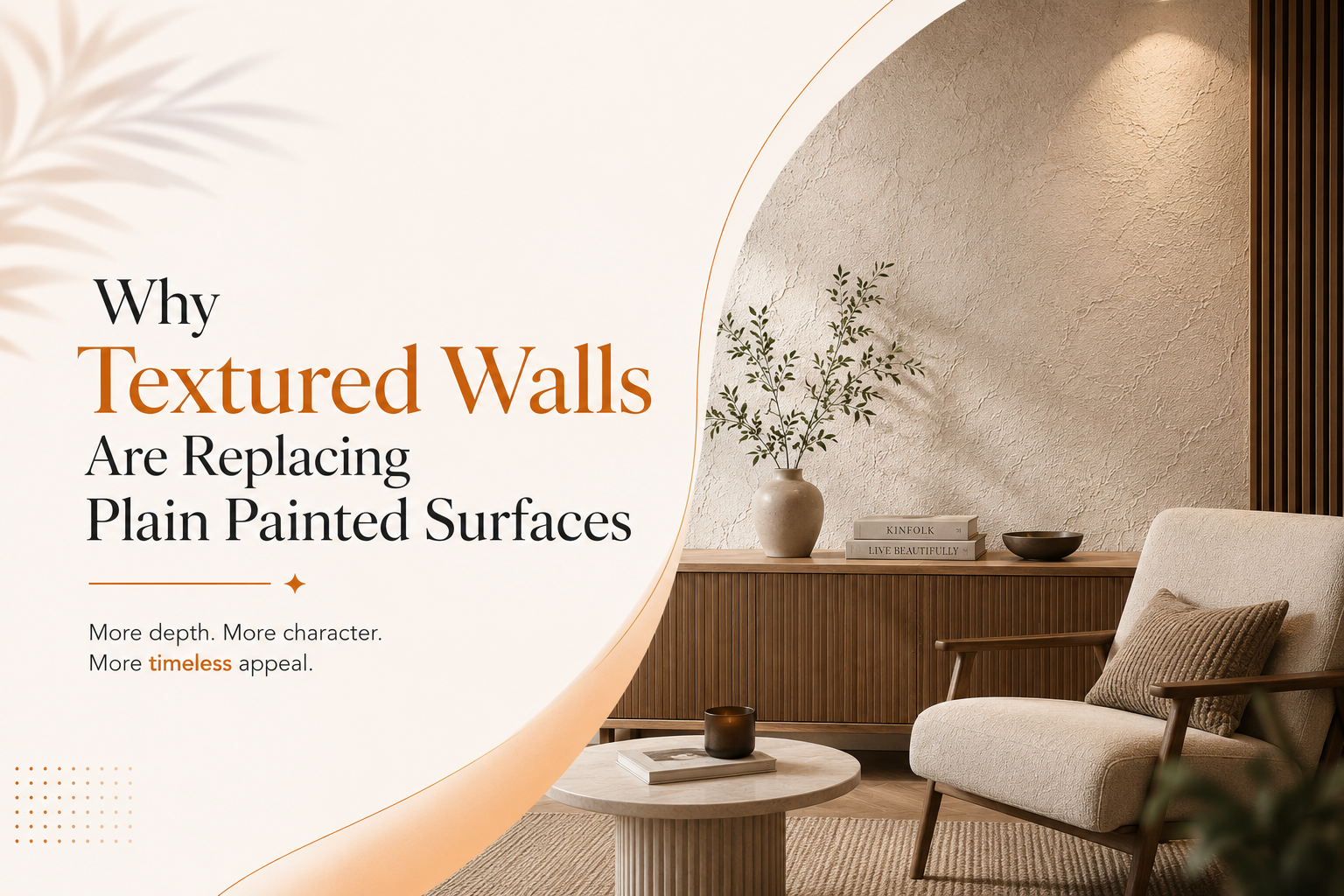
For years, plain painted walls were the default choice for most homes.
They were simple, affordable and easy to coordinate with furniture. But as interiors become more personalised and detail-focused, homeowners are beginning to expect more from their walls.
A wall is no longer viewed as just a background surface. It can define the mood of a room, highlight an architectural feature and add character without requiring excessive décor.
This is why textured walls are becoming an increasingly popular alternative to flat painted surfaces.
From subtle limewash finishes and grooved wooden panels to stone textures and sculptural wall details, texture can make a room feel warmer, richer and more thoughtfully designed.
Here is why textured walls are transforming modern home interiors.
1. They Add Depth to Simple Spaces
Plain painted walls often create a clean appearance, but they can sometimes make a room feel visually flat.
Texture introduces shadows, movement and variation. Even when the wall uses a neutral colour, its surface can make the room feel more layered and interesting.
A softly textured beige wall, for example, can create more depth than a flat beige paint finish. The colour remains calm, but the surface changes throughout the day depending on the natural and artificial lighting.
This makes textured walls especially useful in minimal interiors where homeowners want visual interest without adding several colours or decorative objects.
2. They Make a Room Feel More Premium
A premium interior is often defined by its finishing details.
Textured walls can create a custom-designed appearance because they feel more intentional than a standard painted surface. Materials such as Venetian plaster, microcement, fluted wood, natural stone and decorative wall panels can instantly elevate a room.
However, luxury does not require covering every wall with an expensive material.
One well-designed textured surface behind the television, bed, dining table or entrance console can become the focal point of the entire room.
The remaining walls can stay simple, allowing the highlighted material to stand out without making the space feel flashy.
3. They Reduce the Need for Excessive Décor
H
omeowners often use paintings, frames, wall clocks and shelves to prevent plain walls from looking empty.
A textured wall already has its own visual character. It can create an attractive backdrop even when very little décor is added.
For example, a grooved wooden TV wall may need only a simple floating console. A textured plaster wall behind the sofa may require just one artwork or wall light. A stone-finished dining wall may look complete with a mirror and subtle lighting.
This approach helps the home feel cleaner and more organised while still maintaining a strong design identity.
4. They Work Beautifully With Lighting
Texture becomes more noticeable when it interacts with light.
Grooves, ridges, uneven surfaces and layered finishes create natural highlights and shadows. This effect can change throughout the day as sunlight moves across the room.
Artificial lighting can enhance it further.
Wall washers, concealed strip lights, pendant lights and focused spotlights can reveal the depth of the surface and turn the wall into an architectural feature.
This is one reason lighting and wall design should be planned together. The right light can make a subtle texture feel elegant, while poor lighting may hide the material completely.
5. They Create Warmth and Character
Many modern homes use clean lines, modular furniture and neutral colour palettes. While this creates an organised look, it can also make the space feel too uniform.
Textured surfaces introduce softness and individuality.
Natural wood grains, limewash, exposed brick, stone and handcrafted plaster create small
variations that prevent the home from looking machine-made.
These imperfections make the space feel warmer and more lived-in.
For Bengaluru homeowners who want contemporary interiors without creating a cold or overly polished atmosphere, texture can provide the right balance.
6. They Help Define Different Areas
Open-plan homes often combine the living room, dining area and kitchen within one continuous space.
Textured walls can visually separate these areas without building additional partitions.
A stone or wood-finished wall may identify the dining area, while a textured paint finish can define the living room. A fluted panel behind the entrance console can create a small foyer within an open layout.
This technique is especially practical in apartments where homeowners want each area to feel distinct while maintaining openness and natural light.
7. They Offer More Design Possibilities
Textured walls are not limited to rough paint finishes.
There are several materials and techniques that can be selected according to the room, budget and desired style.
Popular options include:
a) Limewash and textured paint
b) Venetian plaster
c) Microcement finishes
d) Fluted wooden panels
e) Stone and stone-inspired cladding
f) Grooved MDF panels
g) Fabric or upholstered panels
h) Exposed brick finishes
A limewash wall may suit a warm, minimal home, while dark fluted wood can create a more sophisticated appearance. Upholstered panels work well in bedrooms, and microcement can support a clean, contemporary style.
The material should be chosen according to the function and atmosphere of the room.
8. They Can Highlight Architectural Features
Texture can direct attention towards the most important part of a room.
In a bedroom, it can emphasise the bed backdrop. In a living room, it can frame the television unit.
In a pooja area, it can create a calm and distinctive background.
Textured finishes can also be used to highlight niches, columns, passage walls and ceiling details that may otherwise appear unnoticed.
Instead of treating architectural elements as obstacles, thoughtful surface design can turn them into features.
9. They Bring Natural Materials Indoors
Modern homeowners are increasingly drawn towards materials that feel connected to nature.
Wood, stone, clay, cane and mineral-based plaster can make interiors feel grounded and calming.
Their natural variations give each surface a unique appearance.
These materials can also complement indoor plants, warm lighting and soft fabrics, creating an environment that feels more comfortable and balanced.
In a fast-paced city like Bengaluru, natural textures can help the home feel like a calmer retreat from the outside world.
10. They Make Interiors Feel More Personal
A plain painted wall can be easily repeated in another home.
Textured walls allow for greater personalisation through pattern, material, craftsmanship and finish.
The same fluted panel can look completely different depending on its colour, width, lighting and surrounding furniture. A handmade plaster finish will naturally carry small variations that make the surface feel unique.
This allows homeowners to create a space that reflects their own style rather than following a standard showroom design.
Where Should Textured Walls Be Used?
Texture can be introduced in almost any part of the home, but it should be used with balance.
Suitable locations include:
a) Behind the living-room television
b) Behind the bed
c) In the dining area
d) At the entrance or foyer
e) Around the pooja unit
The objective is not to texture every surface. When too many materials compete within the same room, the interior can feel busy.
One or two highlighted walls usually create a stronger and more refined result.
Choosing the Right Texture for Your Home
A textured finish should not be selected only because it looks attractive in a photograph.
Before choosing a material, consider:
a) The size of the room
b) The amount of natural light
c) The furniture and colour palette
d) Cleaning and maintenance requirements
e) Moisture exposure
f) Installation method
g) Long-term durability
Deep grooves may collect more dust, while certain natural materials may require specialised maintenance. Dark stone or wood can look elegant in a spacious room but may make a small, poorly lit room feel heavier.
The right texture should improve the space both visually and practically.
Design Beyond Plain Surfaces
Textured walls are becoming popular because homeowners want interiors with greater depth, warmth and individuality.
But texture should always be used with purpose.
At Timberlane, we listen first. We understand your preferred style, room dimensions, lighting conditions and everyday maintenance needs before recommending a wall finish.
From subtle textured paint and elegant wood panelling to sculptural surfaces and statement stone, every material is selected to complement the complete interior.
Because a well-designed wall should do more than fill a room.
It should shape how the space feels.
Planning interiors for your Bengaluru home?
Connect with Timberlane for a personalised design consultation and create walls that bring depth, character and purpose to every room.
Ready to Design a Home That Feels Like You?
Connect with Timberlane today and let us transform your vision into a beautifully designed living experience.
Start Your Journey